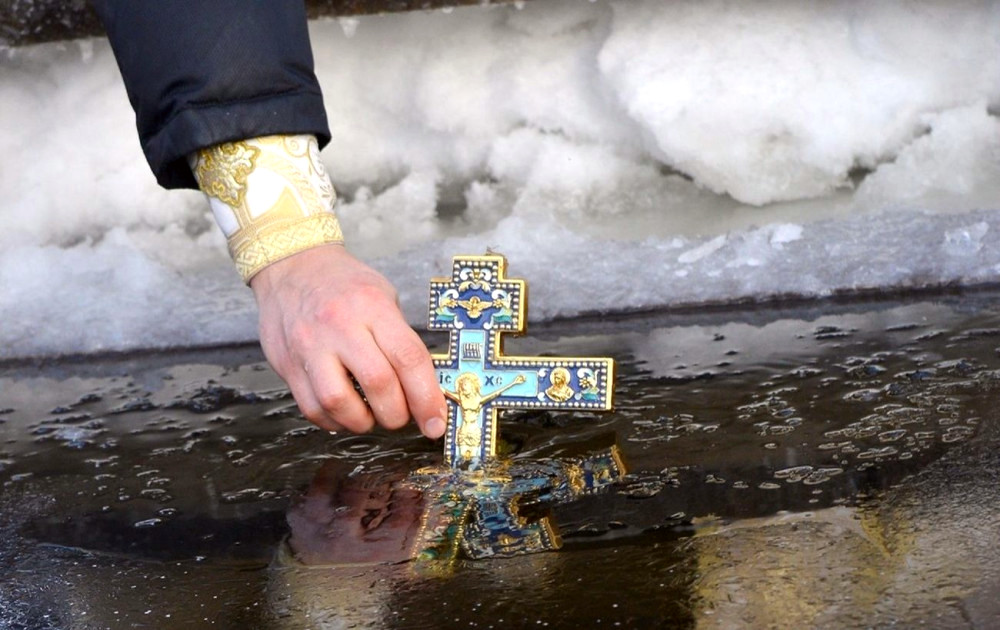
On January 6th, Ukrainians celebrate the Baptism of the Lord, also known as Theophany.
This holiday marks the conclusion of the Christmas and New Year cycle. It is commonly referred to as Epiphany or Jordan, as reported by Ukrinform.
Theophany spans three days. Similar to Christmas, it begins with a fasting kutya on the Eve; then comes the day of the Baptism, or Jordan, followed by the commemoration of John the Baptist the next day. This time is dedicated to the gospel event of the baptism of Jesus Christ in the Jordan River by John the Baptist.
The Holy Scripture mentions that during the baptism, the Holy Spirit descended upon Jesus in the form of a dove, and a voice from heaven was heard, which is why the holiday is called Theophany. On this day, festive liturgies take place in all churches, culminating in the great blessing of the water. This rite has roots in the early days of Christianity, following the example of Jesus who sanctified the waters of the Jordan.
The water blessed on the eve of Theophany, January 5th, and on the day of Baptism, January 6th, holds the same power: it is used to bless churches, administered to the sick, and kept at home throughout the year until the next Baptism.
Many folk signs are associated with the Baptism. For instance, clear and cold weather on this day predicts a dry summer, while cloudy and snowy weather forecasts a bountiful harvest. Snow during the water blessing signifies that bees will swarm well and grain will thrive. A starry night indicates a good yield of nuts and berries. The last carols are sung on Baptism. In ancient times, a new wedding season began after this holiday, lasting until Lent.
This year, Ukraine officially celebrates Baptism on January 6th for the third time. The Orthodox Church of Ukraine and the Ukrainian Greek Catholic Church transitioned to the New Julian calendar on September 1, 2023, so most church dates are now observed 13 days earlier.
At the same time, some believers will continue to celebrate Baptism on the Julian calendar - January 19th. This calendar is also followed by the Russian, Serbian, Georgian, and Jerusalem Orthodox Churches.
The New Julian calendar is used by the majority of Orthodox Churches worldwide, including the Ecumenical Patriarchate.